



連続亜鉛めっきライン
/Cold-rolling the future: practical notes on roll-bonded cladding I’ve walked more mills than I can remember, and—honestly—the moment you see a clean, single-pass bond line form, it’s hard not to grin. If you’re weighing roll bonding cladding for bimetal or trimetal strip, here’s the real-world picture from the shop floor to the boardroom. Why this tech is trending Markets are nudging hard toward lighter, cleaner, and cheaper. Electronics interconnects, decorative façades, chemical processing liners, and auto busbars keep asking for copper-on-steel, aluminum-on-steel, and even triple stacks without the headaches of explosive cladding or heavy hot rolling. To be frank, many customers say they’re done with soot, uneven surfaces, and environmental permits that take forever. The Cladding Rolling Mill from YWLX (Beijing—No.1518, LAR Valley Int'l, Guangwai Avenue, Xicheng District, 100055) leans on cold process control to deliver smooth clad strip up to 1000 mm wide and down to ≈0.2 mm—surprisingly thin for daily production. Process flow—how the bond happens Materials: copper/steel, aluminum/steel, copper/aluminum, aluminum/stainless, stainless/steel (bimetal or triple). Methods: coil prep (degrease, oxide brushing), stack/align, reduction schedule, primary bonding pass, optional intermediate anneal, finish reduction, tension levelling, slit/rewind. Typical QA: peel or shear at room temp, UT scanning, eddy-current at edges, tensile pull per ISO/ASTM, corrosion probe where needed. Standards customers ask for most often include ASTM A263/A264/A265 for clad plate acceptance and bond tests, tensile per ASTM E8/E8M or ISO 6892-1, and UT per ASTM A578/A578M. Service life? It depends—architectural panels often quote 15–25 years; heat-exchanger sheet in moderate chemistries can run a decade or more with routine passivation (real-world use may vary). Product specs (typical) Product Cladding Rolling Mill (YWLX) Max coil width ≈1000 mm Min finished thickness ≈0.2 mm (material/stack dependent) Material combinations Cu/Steel, Al/Steel, Cu/Al, Al/SS, SS/Steel; bi- or tri-metal Line speed ≈30–80 m/min (setup dependent) Bond shear (indicative) ≥70 MPa, often 90–120 MPa per pair and reduction Surface quality Ra ≤0.4 μm examples in FAT logs Energy ≈0.25–0.45 kWh/kg (process window) Vendor comparison (quick take) Option Pros Trade-offs YWLX Cladding Rolling Mill Cold process, thin gauges (≈0.2 mm), clean surface, continuous coil, bi/tri-metal Needs tight surface prep; bond tuning by pair Explosive cladding vendor Good for thick plate, dissimilar extremes Surface waviness, environmental permitting, not coil-based Hot rolling retrofit Established route for plate-sized runs Higher energy, thicker product bias, larger capex Applications and field notes Electronics/busbars: Cu/Al or Cu/Steel saves cost while holding conductivity; customers report easier stamping and fewer burrs. Decor & architecture: Al/SS panels for corrosion resistance with nice finish—less polishing downstream. Chemical liners: SS/Steel or Al/Steel as diffusion/barrier layers; UT acceptance simplifies QA. Mini case snippets: an EV connector shop switched to roll bonding cladding Cu/Al and cut raw metal costs ≈18% while meeting pull tests to ASTM E8. A mid-size heat-exchanger maker moved to Al/Steel with UT per ASTM A578; scrap fell by about a third—small, but it compounds. Customization, QA, and documentation Configurable brushing/degrease modules, reduction schedules, and inline UT/eddy-current are standard options. CE/ISO 9001 documentation support is available on request. For compliance-heavy buyers, YWLX maps mill tests to ASTM A263/A264/A265 bond checks and tensile per ISO 6892-1. It seems that even auditors like clean traceability. Origin: No.1518, LAR Valley Int'l, Guangwai Avenue, Xicheng District, Beijing, 100055 • Product: Cladding Rolling Mill • Technology scope includes roll bonding cladding of Cu/Steel, Al/Steel, Cu/Al, Al/SS, SS/Steel (bi/tri-metal). References ASTM A263 / A264 / A265 — Specifications for clad plate and bond testing. ASTM E8/E8M — Standard Test Methods for Tension Testing of Metallic Materials. ASTM A578/A578M — Standard Specification for Straight-Beam UT Examination of Rolled Steel Plates. ASM Handbook, Vol. 14A: Metalworking—Sheet Forming; sections on roll bonding fundamentals.

We have successfully executed over 500
projects around the world,
many first-of-their-kind
research projects and products in China, including
We have successfully executed over 500
projects around the world,
many first-of-their-kind
research projects and products in China, including
-
2004
The 1st hydraulic AGC system for hot rolling of ribbon steel
-
2006
The 1st AFC system used for 1450mm skin pass mill
-
2009
The 1st 5-stand tandem line with 2-stand POR & Uncoiler for 650mm ribbon steel
-
2012
The 1st reversing mill for 1380mm strip
-
2016
The 1st soft-rolling system used in skin pass mill
-
2019
The 1st fully automated medium-width tandem cold rolling mill
-
2021
The 1st 5000KN Twin-stand double skin pass mill
-
2022
The 1st coupled pickling line & tandem cold mill with two modes - big roller & small roller
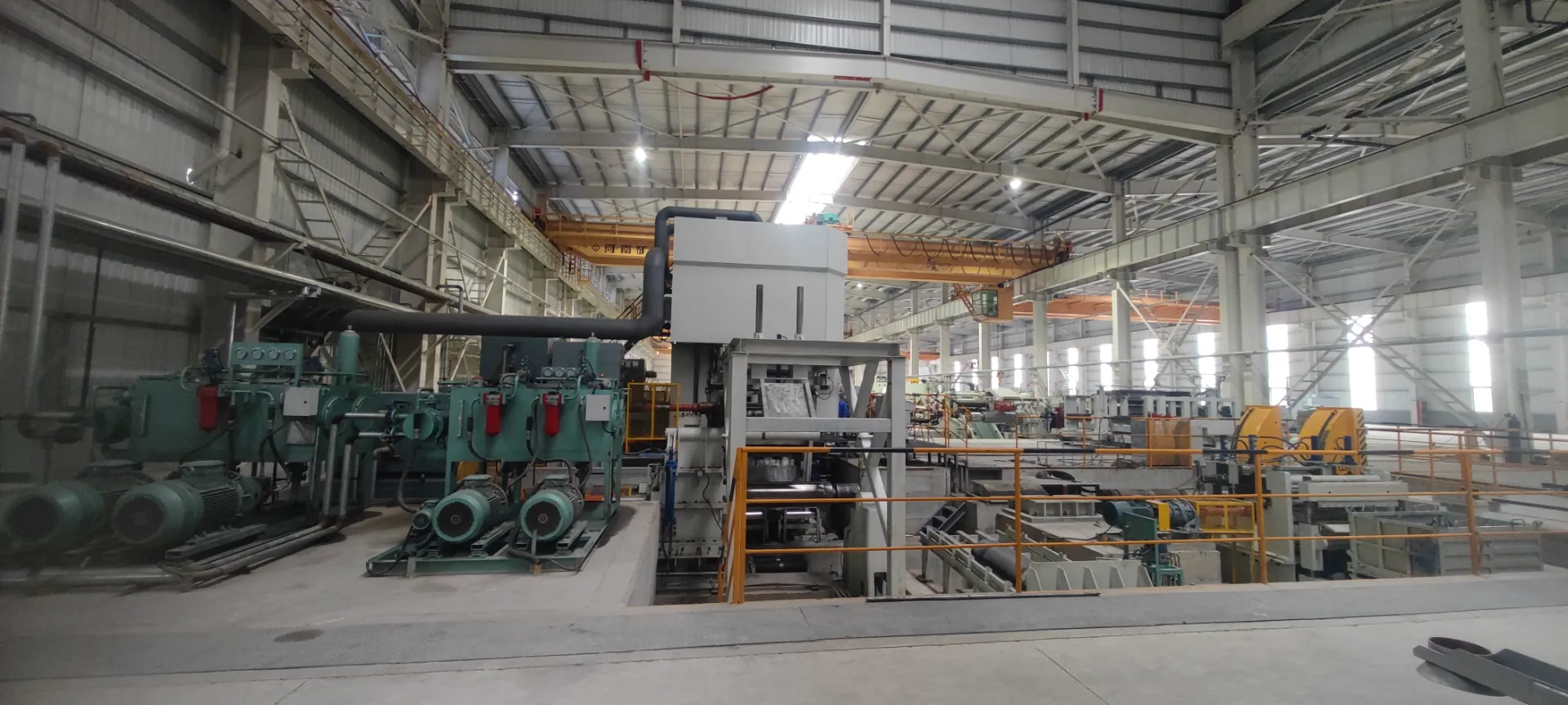
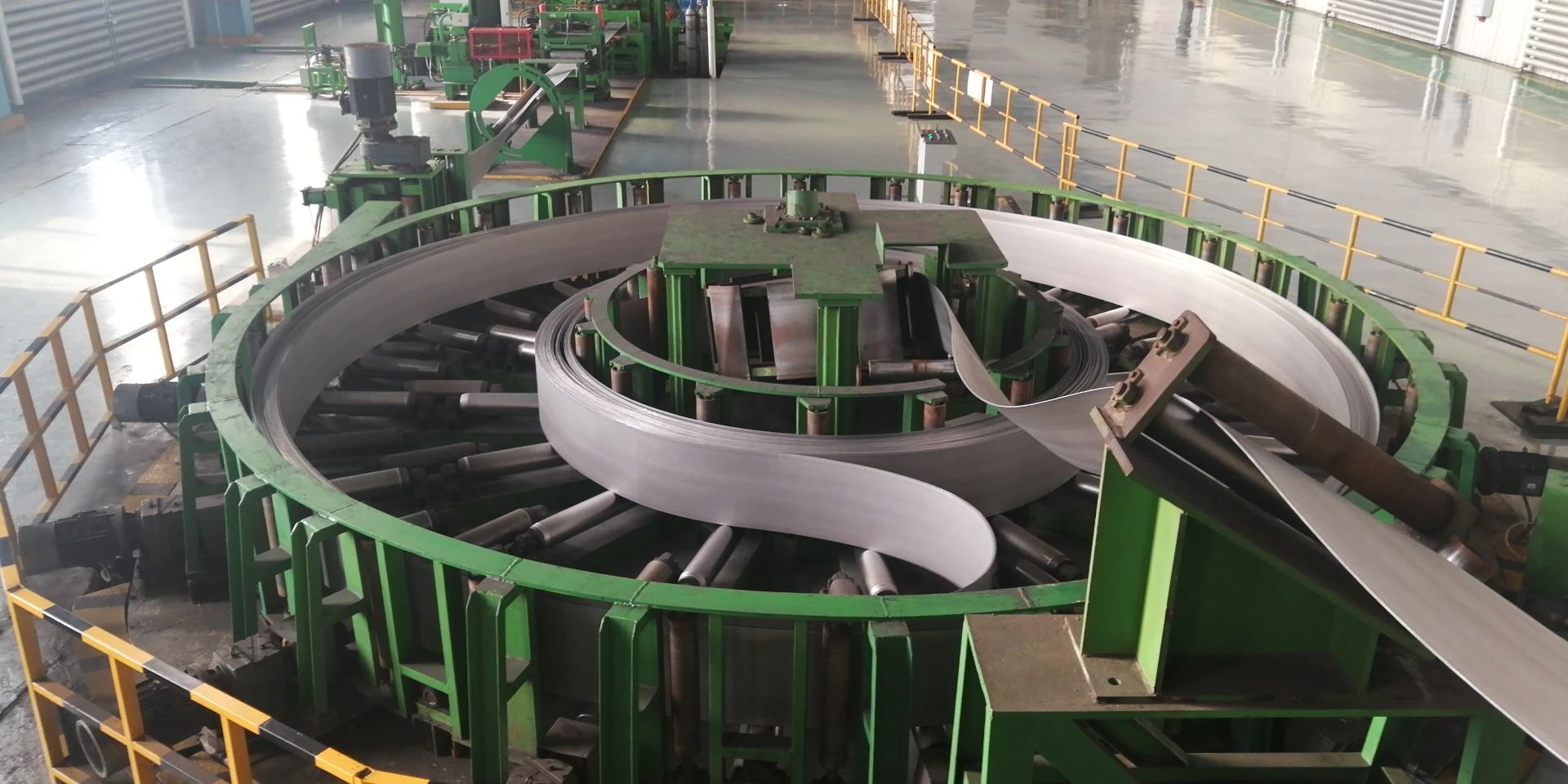
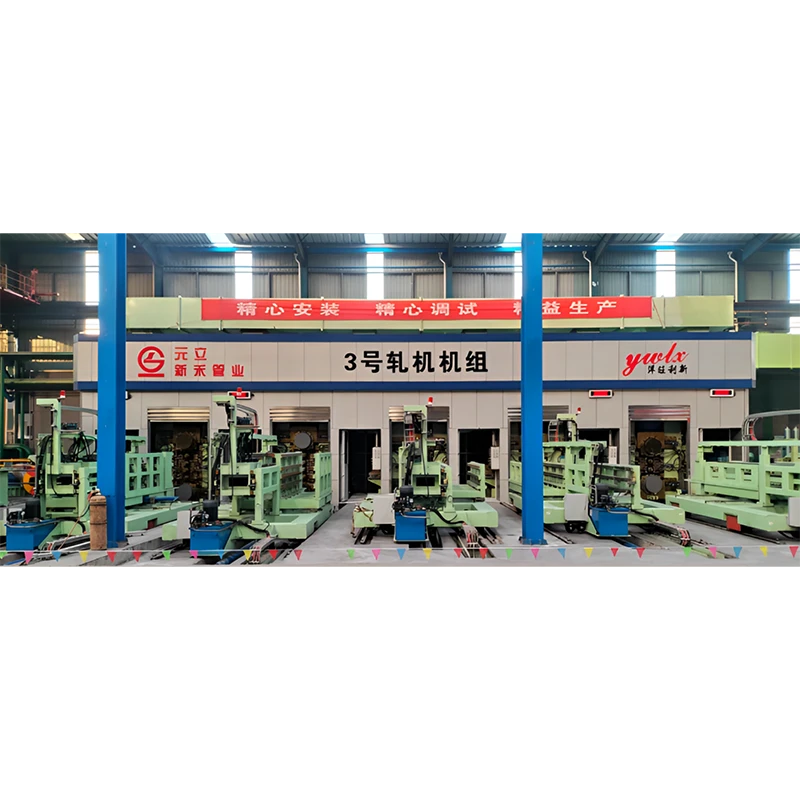
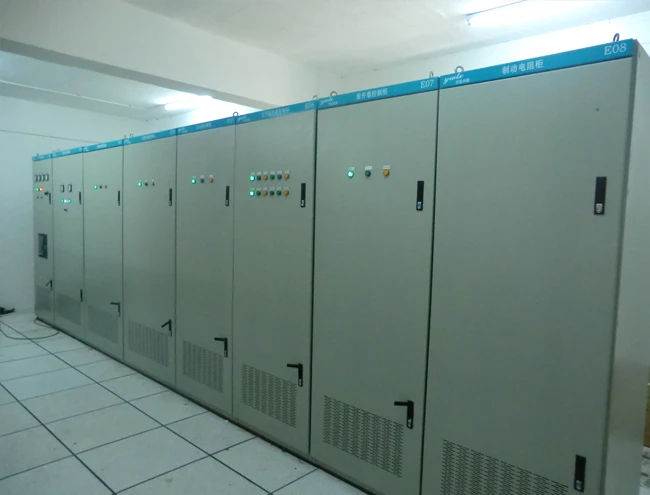
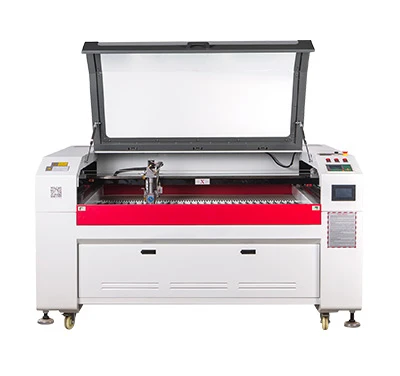
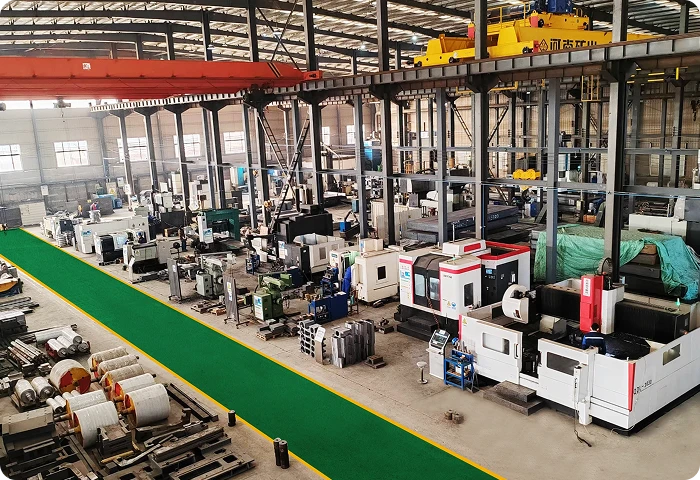
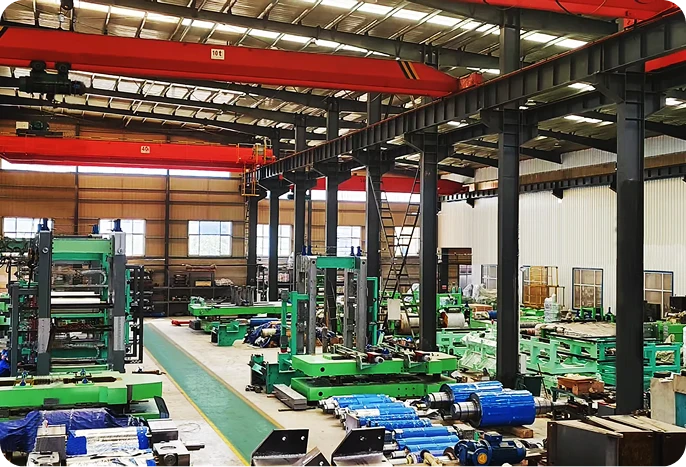
Yang Wang Li Xin operates a state-of-the-art facility over 66,000 square meters,and our manufacturing facility is fully equipped with high-tech machinery and high-capacity cranes. This enables us to handle large work pieces measuring 4.5m in width, 10m in length, and 1.5m in height, guaranteeing our capacity to produce 1800mm skin-pass mills and 1450mm rolling mills. The individual piece can weigh up to 100 tons.


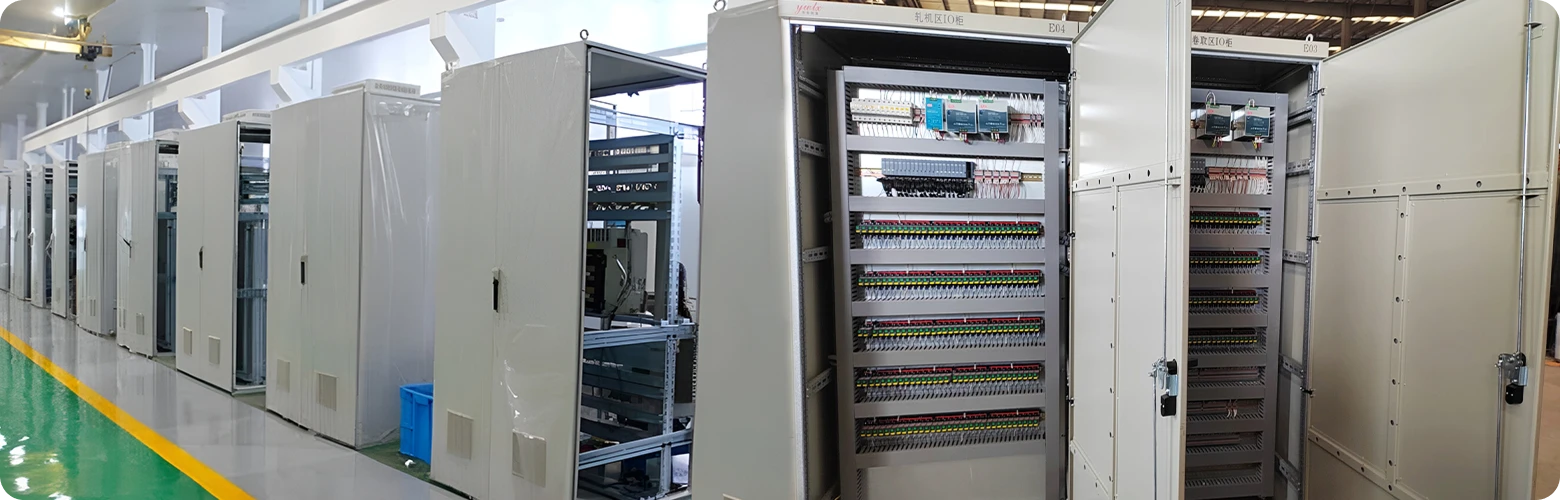
Quality is fundamental to the enterprise survival. We have established a comprehensive and meticulous quality management system and have successfully obtained ISO14000 certification. Starting from the design source, it supervises the entire production cycle, including design, procurement, processing, assembly, in-factory testing, installation, and online commissioning. The workshop is equipped with measuring tools like vernier calipers, spectrometers, hardness testers, and ultrasonic flaw detectors. They are used to check materials and control tolerances to ensure the final equipment meets or exceeds requirements. All products have a unique code, This enables the easy identification and traceability of the equipment components and ensures full control of quality.


-
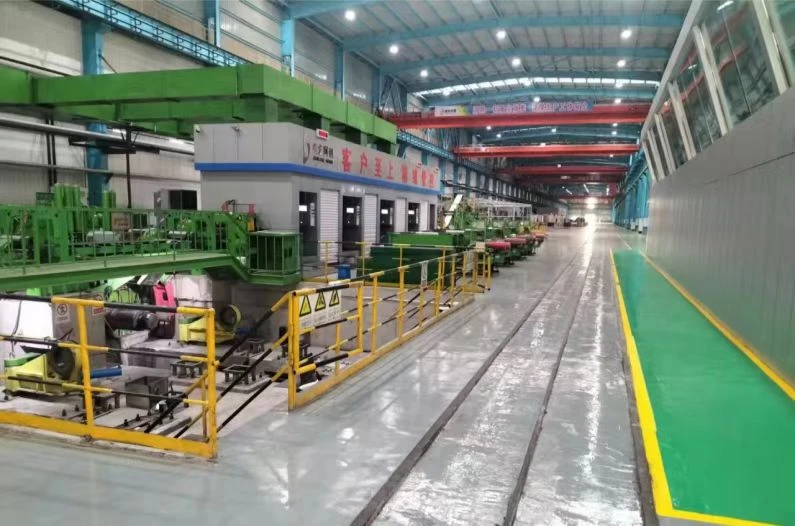 Cold Rolling Mill Machines: Precision and Efficiency in Metal ProcessingIn the metal processing industry, cold rolling mill machine s play a vital role in producing high-quality, precision-engineered metal sheets and strips. These machines enhance surface finish, strength, and dimensional accuracy, making them essential in industries such as automotive, aerospace, construction, and electronics. Among them, 4 high rolling mill s and 6 high rolling mill s are widely use
 -
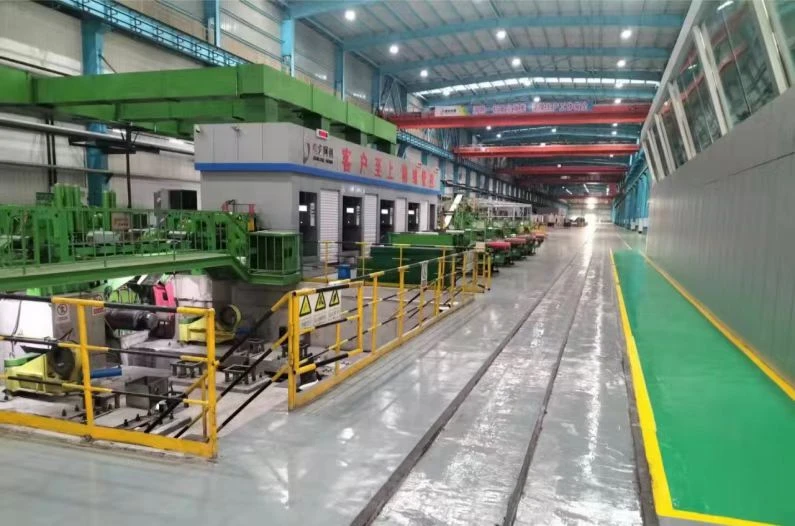 round wire rolling millIn the ever-evolving world of metallurgy and manufacturing, the round wire rolling mill stands as a pivotal piece of technology. This machinery, robust and meticulously designed, plays a critical role in shaping metals that form the backbone of various industries. Specializing in transforming raw metal into fine wires, this equipment must combine precision, durability, and efficiency to meet the h
 -
 The Application of Temper Mill in Bright Annealing LineIn the realm of steel processing, the bright annealing line plays a crucial role in enhancing the quality and appearance of steel products. Integrating the temper mill into this process further optimizes the properties of the steel, leading to high - performance materials suitable for a wide range of applications. Temper Mill in the Bright Annealing Line Process After steel has undergone the brigh


